


How do gear reducers convert high-speed motor output into stable, high torque?
Release Time : 2025-12-18
In modern electromechanical systems, whether it's the dexterous joints of industrial robots, conveyor belts on automated production lines, or the drive wheels of electric forklifts, a seemingly unassuming yet crucial core component often plays a vital role—gear reducers. Motors typically operate at high speeds and low torque, but practical applications often require slow yet powerful motion. Gear reducers act as "power translators," transforming the motor's swift "steps" into the equipment's steady "punch."
The core principle stems from the conservation of speed and torque in gear transmission. When two gears of different sizes mesh, the smaller gear (driving gear) drives the larger gear (driven gear) to rotate. Because the larger gear has more teeth and a larger circumference, it takes much longer to complete one revolution than the smaller gear. This means the output shaft speed is significantly reduced. According to the fundamental law of energy conservation, ignoring minor frictional losses, input power equals output power. As the speed decreases, the torque (i.e., torsional force) inevitably increases accordingly. This "speed-for-power" mechanism is the fundamental reason why speed reducers amplify torque.
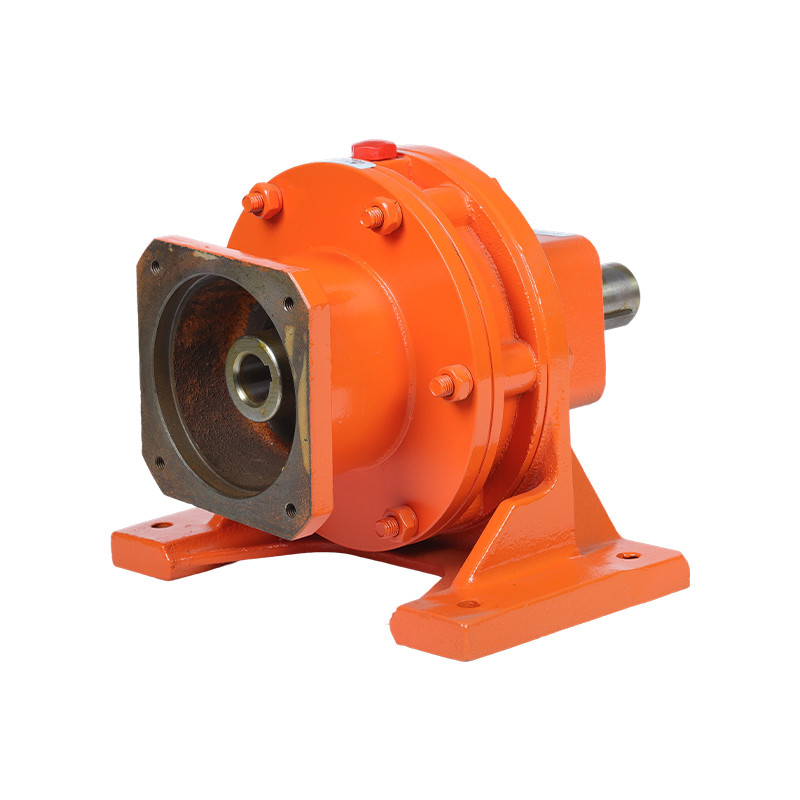
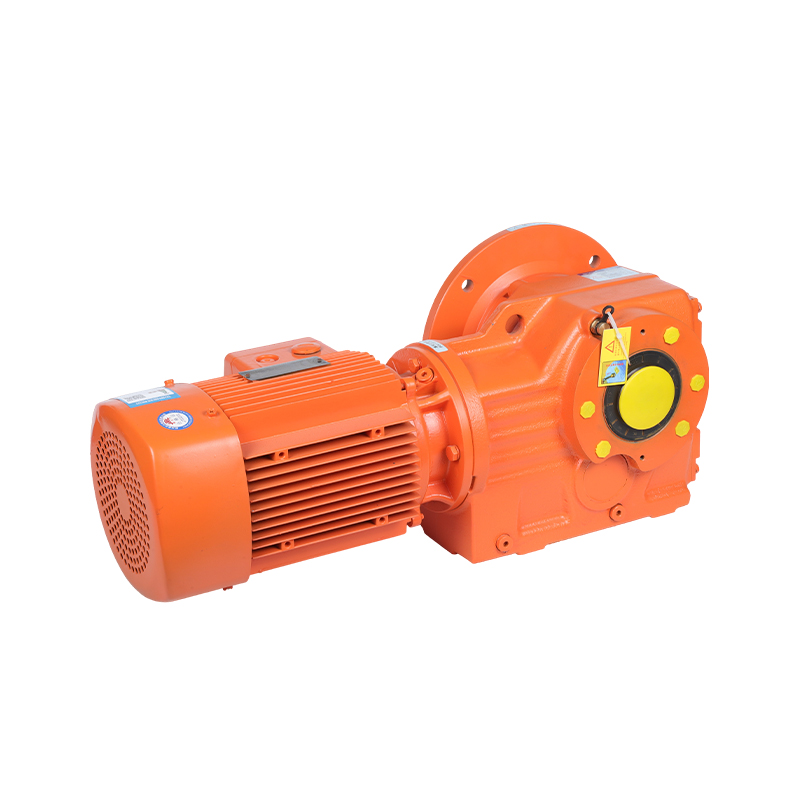
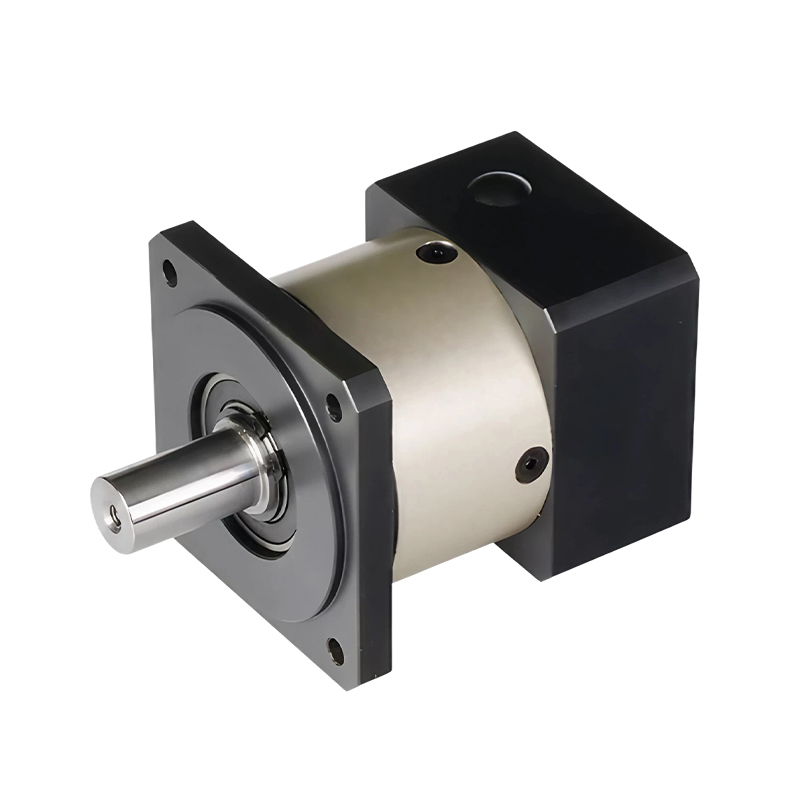
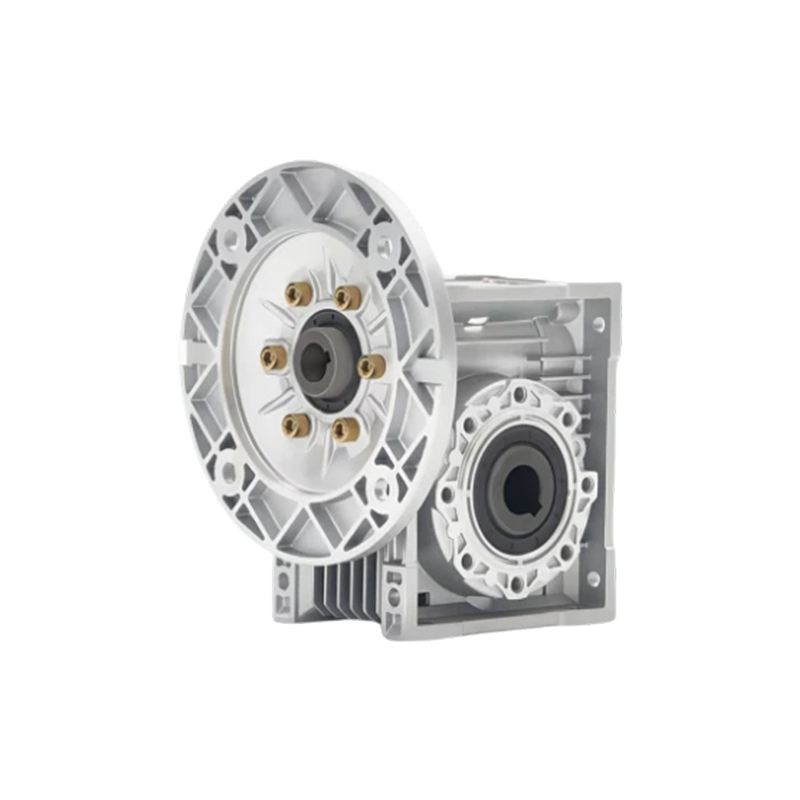
However, a single pair of gears often cannot meet the industrial demands for high reduction ratios and compact structures. Therefore, modern electromechanical gear reducers commonly employ multi-stage gear combinations, such as planetary gear sets, parallel shaft gear sets, or worm gear sets. Planetary reducers are particularly typical: they consist of a central sun gear, multiple planetary gears rotating around it, and an outer internal gear ring. This layout not only achieves a high reduction ratio in a very small space but also distributes the load evenly across multiple planetary gears, significantly improving load-bearing capacity and operational smoothness. Each stage of transmission further reduces the speed and increases the torque, ultimately allowing the output shaft to transmit several times, or even tens of times, the original torsional force of the motor at extremely low speeds.
More importantly, stability and precision are key differences between high-end speed reducers and simple transmission devices. High-quality speed reducers use high-hardness alloy steel to manufacture gears, which undergo precision grinding and heat treatment to ensure smooth tooth surfaces and tight meshing. This not only reduces vibration and noise during operation but also prevents gear grinding or positional drift caused by excessive backlash. Especially in servo control systems, the low backlash (i.e., minimal reverse backlash) design allows motor commands to be precisely and instantly translated into mechanical actions, which is crucial for robot trajectory control or CNC machine tool machining.
Furthermore, the fully enclosed structure and long-lasting lubrication system ensure long-term reliable operation. The gears inside the reducer are immersed in special grease or lubricating oil, effectively cooling and reducing wear even under continuous operation; the sealed design prevents dust and moisture intrusion, enabling stable service in harsh environments such as factory workshops, outdoor equipment, and even food and pharmaceutical industries. Many products also integrate mounting flanges, output shaft keyways, or encoder interfaces for quick docking with motors and loads, forming an integrated drive unit.
Ultimately, the value of gear reducers lies not in complexity, but in solving fundamental power matching problems with pure mechanical intelligence. It has no chips, yet it is more reliable than many electronic systems; it is silent, yet it silently supports the rhythm of the entire automated world. When a heavy machine slowly lifts a multi-ton load, or when a robotic arm completes assembly with millimeter-level precision, behind the scenes, gear reducers are silently converting electrical energy into controllable power. In this transformation between "fast and slow," "light and heavy," they serve as both a bridge and a foundation—with their steel bodies, enabling the electromechanical system to achieve composure and power.
The core principle stems from the conservation of speed and torque in gear transmission. When two gears of different sizes mesh, the smaller gear (driving gear) drives the larger gear (driven gear) to rotate. Because the larger gear has more teeth and a larger circumference, it takes much longer to complete one revolution than the smaller gear. This means the output shaft speed is significantly reduced. According to the fundamental law of energy conservation, ignoring minor frictional losses, input power equals output power. As the speed decreases, the torque (i.e., torsional force) inevitably increases accordingly. This "speed-for-power" mechanism is the fundamental reason why speed reducers amplify torque.
However, a single pair of gears often cannot meet the industrial demands for high reduction ratios and compact structures. Therefore, modern electromechanical gear reducers commonly employ multi-stage gear combinations, such as planetary gear sets, parallel shaft gear sets, or worm gear sets. Planetary reducers are particularly typical: they consist of a central sun gear, multiple planetary gears rotating around it, and an outer internal gear ring. This layout not only achieves a high reduction ratio in a very small space but also distributes the load evenly across multiple planetary gears, significantly improving load-bearing capacity and operational smoothness. Each stage of transmission further reduces the speed and increases the torque, ultimately allowing the output shaft to transmit several times, or even tens of times, the original torsional force of the motor at extremely low speeds.
More importantly, stability and precision are key differences between high-end speed reducers and simple transmission devices. High-quality speed reducers use high-hardness alloy steel to manufacture gears, which undergo precision grinding and heat treatment to ensure smooth tooth surfaces and tight meshing. This not only reduces vibration and noise during operation but also prevents gear grinding or positional drift caused by excessive backlash. Especially in servo control systems, the low backlash (i.e., minimal reverse backlash) design allows motor commands to be precisely and instantly translated into mechanical actions, which is crucial for robot trajectory control or CNC machine tool machining.
Furthermore, the fully enclosed structure and long-lasting lubrication system ensure long-term reliable operation. The gears inside the reducer are immersed in special grease or lubricating oil, effectively cooling and reducing wear even under continuous operation; the sealed design prevents dust and moisture intrusion, enabling stable service in harsh environments such as factory workshops, outdoor equipment, and even food and pharmaceutical industries. Many products also integrate mounting flanges, output shaft keyways, or encoder interfaces for quick docking with motors and loads, forming an integrated drive unit.
Ultimately, the value of gear reducers lies not in complexity, but in solving fundamental power matching problems with pure mechanical intelligence. It has no chips, yet it is more reliable than many electronic systems; it is silent, yet it silently supports the rhythm of the entire automated world. When a heavy machine slowly lifts a multi-ton load, or when a robotic arm completes assembly with millimeter-level precision, behind the scenes, gear reducers are silently converting electrical energy into controllable power. In this transformation between "fast and slow," "light and heavy," they serve as both a bridge and a foundation—with their steel bodies, enabling the electromechanical system to achieve composure and power.