


How does the RV Worm Gear Reducer reduce power loss in motorhomes?
Release Time : 2025-12-10
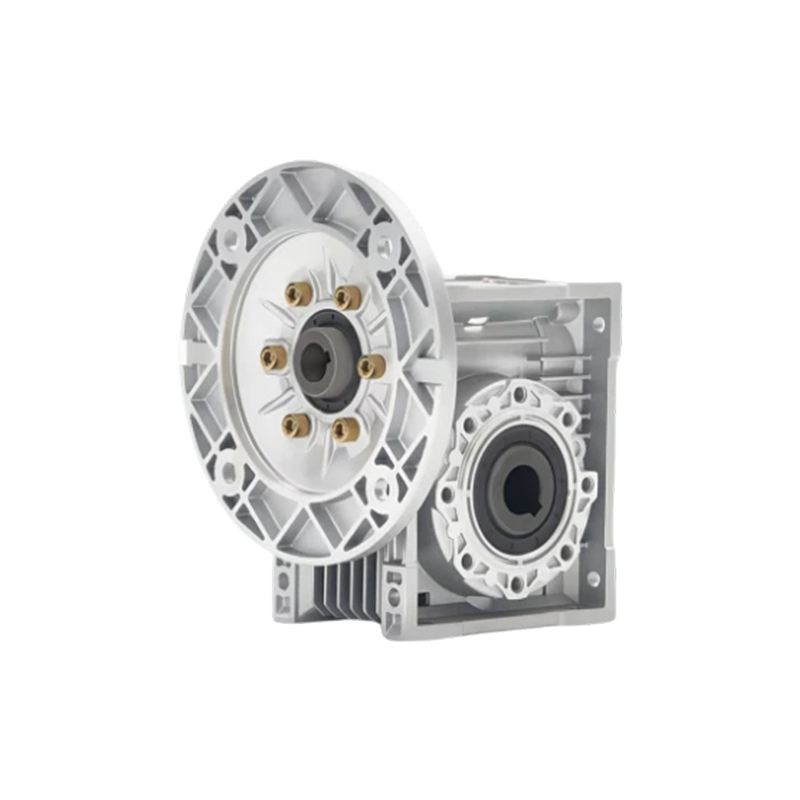
In the mechanical transmission system of a motorhome (RV), power transmission efficiency directly affects fuel economy, ride smoothness, and the lifespan of key components. As a core transmission element in the steering system, lifting mechanism, outriggers, and even solar panel adjustment devices, the RV worm gear reducer plays an irreplaceable role in reducing power loss and improving system energy efficiency due to its unique structural characteristics and precision manufacturing process.
1. High meshing efficiency and self-locking characteristics reduce ineffective energy consumption
The RV worm gear reducer uses a worm gear driven worm wheel unidirectional transmission method. Its helix angle design is precisely calculated to optimize the tooth contact line length and sliding friction path while ensuring a sufficient reduction ratio. Although traditional worm gear pairs are considered inefficient due to high sliding friction, modern RV-specific reducers use high-precision grinding or hobbing processes to control the tooth surface roughness to within Ra≤0.4μm, and with optimized tooth profile modification, significantly reduce local stress concentration and frictional resistance. More importantly, its inherent "self-locking" characteristic—meaning that the load cannot reverse the worm gear when there is a power outage or no driving force—avoids energy leakage or repeated motor start-stop cycles caused by retraction when the RV is parked on a slope or supported by outriggers, thus reducing unnecessary electrical or hydraulic energy consumption.
2. Lightweight and Low Inertia Design Improves Response Efficiency
Addressing the weight sensitivity of RVs, modern RV worm gear reducers widely use high-strength aluminum alloy shells, which reduce overall weight and provide excellent heat dissipation. The internal worm gear is mostly made of alloy steel that has undergone carburizing and quenching treatment, achieving a surface hardness of HRC58–62 and excellent core toughness; the worm wheel is made of tin bronze or aluminum bronze alloy, combining wear resistance and a low coefficient of friction. This "steel-copper" pairing not only extends service life but also reduces frictional power consumption during start-up and operation. Simultaneously, through a compact structural design, the reducer's rotational inertia is controlled at an extremely low level, resulting in less inertial torque that the motor needs to overcome during start-up, stop-up, or speed changes, thereby improving the system's dynamic response efficiency and reducing energy waste during acceleration.
3. Intelligent Lubrication and Sealing System Reduces Internal Losses
A major source of power loss is dry friction and oil churning during gear meshing. RV-specific gear reducers generally employ lifetime or long-life lubrication designs, internally filled with high-performance synthetic lubricating oil with excellent viscosity-temperature characteristics, maintaining a stable oil film thickness within a range of -30℃ to +120℃. Some high-end models also incorporate oil channel guides or splash lubrication optimization structures to ensure precise distribution of lubricating oil in the meshing area, avoiding power loss caused by excessive churning. Furthermore, double-lip seals and a labyrinthine dustproof structure effectively prevent dust and moisture intrusion, avoiding impurities that exacerbate wear, maintaining a long-term low-friction operating state, and indirectly reducing efficiency degradation caused by increased wear.
4. System-Level Integration Optimizes Overall Energy Efficiency
In RV applications, the RV worm gear reducer is often integrated with a DC motor and controller to form an integrated electric actuator or steering unit. By coordinating with the vehicle's electronic control system, on-demand power supply can be achieved—for example, the outriggers only output high torque during leveling, automatically entering low-power standby afterward; the solar panel tracking system intelligently adjusts its operating frequency based on sunlight intensity. This "precise energy use" strategy, combined with the reducer's inherent low no-load loss characteristics, significantly reduces ineffective power consumption during standby and light load conditions. Simultaneously, its high reliability reduces maintenance frequency and downtime due to malfunctions, avoiding secondary energy consumption caused by transmission failure.
While compact in size, the RV worm gear reducer is a key "energy-saving hub" for the efficient and reliable operation of RVs. Through precise transmission design, advanced material application, intelligent lubrication management, and system-level energy efficiency synergy, it effectively suppresses mechanical friction, inertial loss, and ineffective energy consumption, providing solid support for lower energy consumption and longer range while ensuring functional safety. With the deepening trends of electrification and intelligentization, this classic transmission device continues to empower new green travel experiences with higher efficiency, lighter weight, and greater intelligence.
1. High meshing efficiency and self-locking characteristics reduce ineffective energy consumption
The RV worm gear reducer uses a worm gear driven worm wheel unidirectional transmission method. Its helix angle design is precisely calculated to optimize the tooth contact line length and sliding friction path while ensuring a sufficient reduction ratio. Although traditional worm gear pairs are considered inefficient due to high sliding friction, modern RV-specific reducers use high-precision grinding or hobbing processes to control the tooth surface roughness to within Ra≤0.4μm, and with optimized tooth profile modification, significantly reduce local stress concentration and frictional resistance. More importantly, its inherent "self-locking" characteristic—meaning that the load cannot reverse the worm gear when there is a power outage or no driving force—avoids energy leakage or repeated motor start-stop cycles caused by retraction when the RV is parked on a slope or supported by outriggers, thus reducing unnecessary electrical or hydraulic energy consumption.
2. Lightweight and Low Inertia Design Improves Response Efficiency
Addressing the weight sensitivity of RVs, modern RV worm gear reducers widely use high-strength aluminum alloy shells, which reduce overall weight and provide excellent heat dissipation. The internal worm gear is mostly made of alloy steel that has undergone carburizing and quenching treatment, achieving a surface hardness of HRC58–62 and excellent core toughness; the worm wheel is made of tin bronze or aluminum bronze alloy, combining wear resistance and a low coefficient of friction. This "steel-copper" pairing not only extends service life but also reduces frictional power consumption during start-up and operation. Simultaneously, through a compact structural design, the reducer's rotational inertia is controlled at an extremely low level, resulting in less inertial torque that the motor needs to overcome during start-up, stop-up, or speed changes, thereby improving the system's dynamic response efficiency and reducing energy waste during acceleration.
3. Intelligent Lubrication and Sealing System Reduces Internal Losses
A major source of power loss is dry friction and oil churning during gear meshing. RV-specific gear reducers generally employ lifetime or long-life lubrication designs, internally filled with high-performance synthetic lubricating oil with excellent viscosity-temperature characteristics, maintaining a stable oil film thickness within a range of -30℃ to +120℃. Some high-end models also incorporate oil channel guides or splash lubrication optimization structures to ensure precise distribution of lubricating oil in the meshing area, avoiding power loss caused by excessive churning. Furthermore, double-lip seals and a labyrinthine dustproof structure effectively prevent dust and moisture intrusion, avoiding impurities that exacerbate wear, maintaining a long-term low-friction operating state, and indirectly reducing efficiency degradation caused by increased wear.
4. System-Level Integration Optimizes Overall Energy Efficiency
In RV applications, the RV worm gear reducer is often integrated with a DC motor and controller to form an integrated electric actuator or steering unit. By coordinating with the vehicle's electronic control system, on-demand power supply can be achieved—for example, the outriggers only output high torque during leveling, automatically entering low-power standby afterward; the solar panel tracking system intelligently adjusts its operating frequency based on sunlight intensity. This "precise energy use" strategy, combined with the reducer's inherent low no-load loss characteristics, significantly reduces ineffective power consumption during standby and light load conditions. Simultaneously, its high reliability reduces maintenance frequency and downtime due to malfunctions, avoiding secondary energy consumption caused by transmission failure.
While compact in size, the RV worm gear reducer is a key "energy-saving hub" for the efficient and reliable operation of RVs. Through precise transmission design, advanced material application, intelligent lubrication management, and system-level energy efficiency synergy, it effectively suppresses mechanical friction, inertial loss, and ineffective energy consumption, providing solid support for lower energy consumption and longer range while ensuring functional safety. With the deepening trends of electrification and intelligentization, this classic transmission device continues to empower new green travel experiences with higher efficiency, lighter weight, and greater intelligence.